
Andy Warhol: On repetition, image, and the printed surface.
- Harmonia Gallery London

- Feb 5
- 3 min read
Updated: Feb 17
Andy Warhol (1928–1987) remains one of the most influential figures of 20th-century art, not only for his iconic imagery but for his radical redefinition of what art could represent in a mass-media society. More than a pop artist, Warhol was a strategist of images, deeply aware of how visual culture is produced, consumed and remembered.
Born in Pittsburgh to a working-class immigrant family, Warhol showed an early interest in drawing and commercial illustration. His training at the Carnegie Institute of Technology was rooted in applied arts rather than traditional fine art disciplines, a background that decisively shaped his later practice. When he moved to New York in the late 1940s, he entered the world of advertising and fashion illustration, developing a distinctive line-based style and an acute understanding of visual branding, deadlines and reproducibility.
Warhol’s artistic language emerged directly from advertising, magazines, cinema and celebrity culture. Rather than rejecting commercial imagery, he adopted it as raw material, treating mass-produced images as contemporary icons. His embrace of repetition was not merely aesthetic but conceptual: by reiterating the same image, Warhol stripped it of narrative depth while amplifying its symbolic power. In doing so, he mirrored the way media saturates collective consciousness.
This approach reached its most recognizable form through his use of screen printing. Often misunderstood as a way to remove the artist’s hand, Warhol instead used the medium to explore controlled imperfection. Variations in ink density, registration shifts and surface inconsistencies were not accidents but accepted outcomes of the process. In many cases, Warhol deliberately allowed assistants to execute the prints, reinforcing his idea of the artist as a producer rather than a craftsman. The Factory functioned less like a studio and more like a production line, an intentional reflection of industrial logic.
Printed works played a central role in Warhol’s practice. Exhibition posters, portfolios and editioned prints were not secondary products but conceptual extensions of his work. Warhol was among the first artists to fully grasp the power of editions as vehicles of image circulation. He frequently blurred the boundaries between fine art prints, promotional material and ephemera, challenging traditional hierarchies within the art world. Notably, he often signed and numbered works inconsistently, a choice that continues to generate debate among scholars and collectors and reflects his ambivalence toward notions of authenticity.
From a technical standpoint, Warhol’s print production involved close collaboration with master printers, particularly in later years. Choices of paper, ink formulation and edition size were often adjusted to suit the intended context of distribution rather than purely aesthetic considerations. Some colorways were created specifically for certain markets or exhibitions, making them of particular interest to specialists.
From a market perspective, Warhol’s graphic production represents a crucial point of access for collectors. While unique paintings command extraordinary prices, original prints, portfolios and exhibition-related works remain historically significant documents of his thinking about art, commerce and visibility. These works also offer insight into how Warhol actively shaped his own market presence, long before the concept of artist branding became commonplace.
Warhol’s legacy lies not only in his imagery but in his understanding of art as a system of production, distribution and attention. His work anticipated many of the dynamics that define contemporary visual culture, from influencer economies to algorithmic repetition. In this sense, Warhol remains less a figure of the past than a lens through which the present continues to be interpreted.


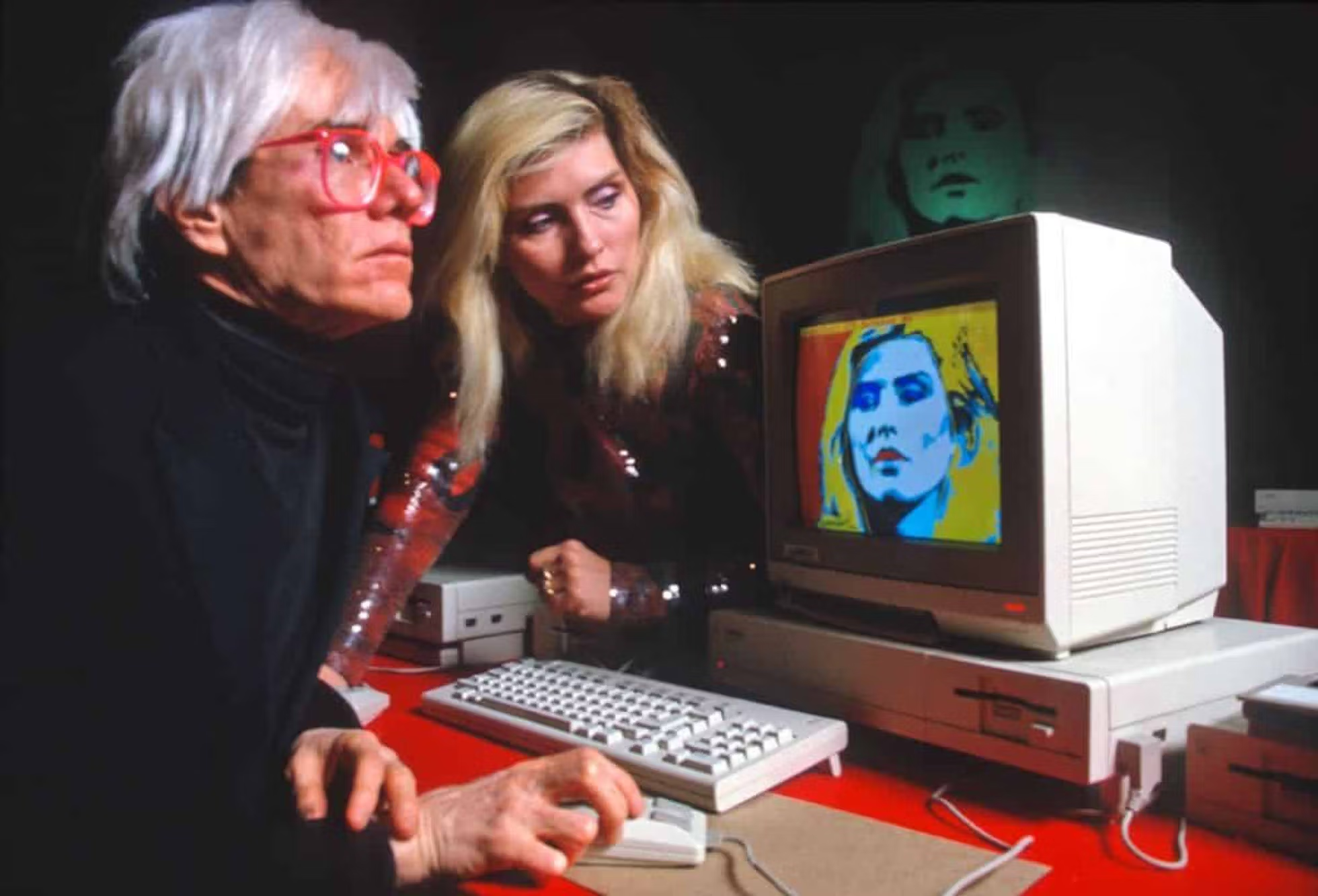


Harmonia Gallery, London


